Developing a Facial Oil: Texture, Plant Oils and Preventing Oxidation
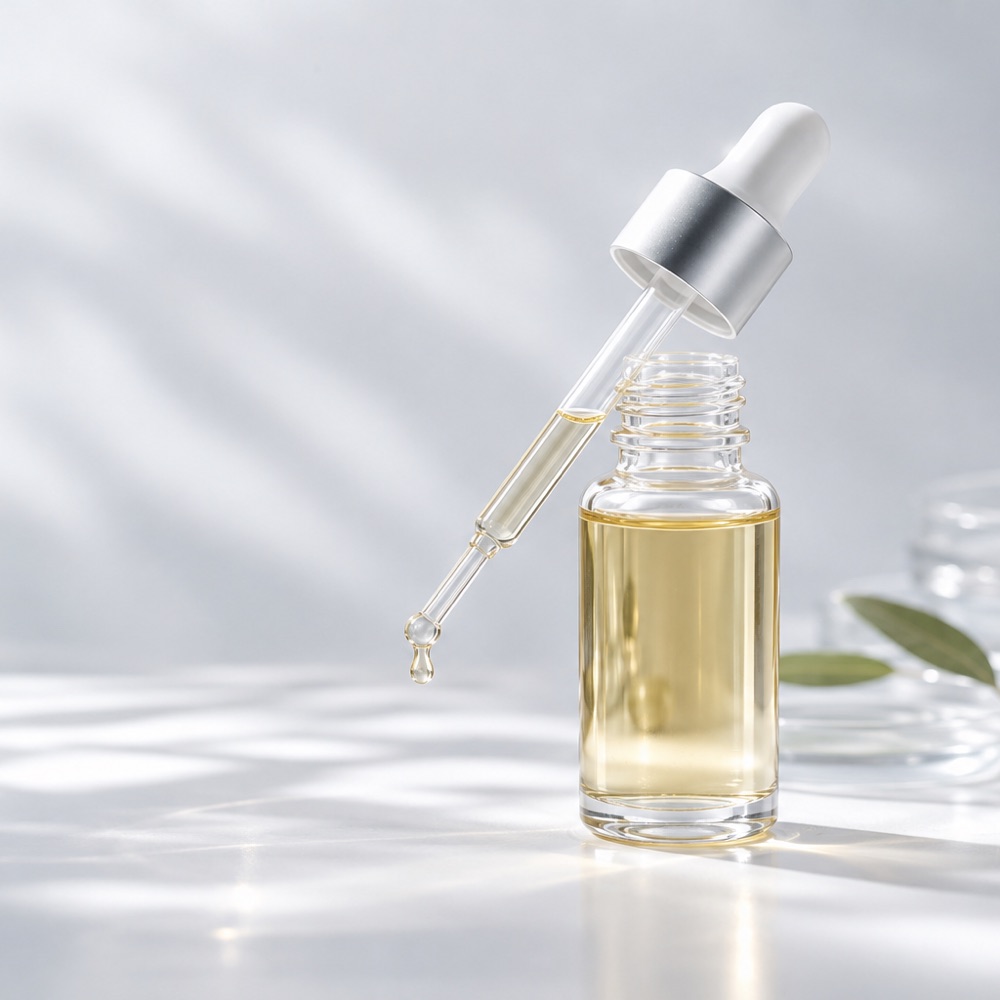
Developing a facial oil is different from developing a serum. A facial oil contains no water, so R&D is working out how oils combine with other oils. Before development, decide four things: where it will be used (face, massage, body or hair), what texture you want (a light dry oil or a richer nourishing oil), which plant oils will tell your brand story, and how to keep it from oxidizing and changing smell. Then pair it with packaging that blocks light and is compatible with oil. Settle these first and sampling won't keep going back and forth.
Key takeaways
For the oil products and packaging Misatsu offers, see Facial Oil OEM. This article covers what you need to decide before development.
Decide the use first: face, massage, body or hair
They are all called "oil", but where they are used changes the direction of development completely.
| Use | When it is used | Texture direction | Common packaging |
|---|---|---|---|
| Facial oil | The last step of a routine, or a few drops mixed into a cream | Light and fast-absorbing, never heavy or sticky | Dark glass dropper bottle |
| Massage oil | Treatments at beauty salons and spas, or massage at home | Good slip, allowing longer massage | Pump bottle, large refill sizes |
| Body oil | Applied after bathing while skin is still slightly damp | Light, doesn't transfer to clothes | Pump bottle, spray bottle |
| Hair oil, scalp oil | Before or after styling, or before shampooing | Doesn't weigh hair down or leave a greasy feel | Dropper bottle, pump bottle |
| Cuticle and on-the-go oils | Touch-ups at the office or when out | A small amount is enough, easy to carry | Roller bottle |
If your customers are beauty salons, massage oils and body oils are often central to the treatment routine; see how a beauty salon can plan its first products.
Texture: dry oils and nourishing oils
Skin feel is the first thing customers remember about a facial oil.
- Dry oil: uses a high proportion of squalane or volatile silicones, absorbs quickly and leaves no shine. It suits customers who dislike a greasy feel and daytime use.
- Nourishing oil: built mainly on richer plant oils that stay on the skin longer. It suits dry seasons, night-time care or massage.
When testing samples, describe the situation in your feedback, such as "ten minutes after applying, my face is still shiny and makeup slides". That helps R&D adjust far more than just writing "too oily". For how to write feedback, see sample revision feedback in serum development; the same principles apply.
Choosing plant oils: start from the brand story and skin feel
Plant oils are the star of a facial oil and the easiest place to tell a brand story. Common choices are below; the actual formula is balanced by R&D for texture and stability.
| Plant oil | Skin feel | Common brand directions |
|---|---|---|
| Jojoba oil | Stable, gentle feel, often used as a base oil | Simple care for all skin types |
| Squalane | Very light and fast-absorbing, a common ingredient in dry oil textures | Light, science-led skincare |
| Rosehip oil | Richer texture, oxidizes more easily, needs antioxidants and light protection | Natural, botanical positioning |
| Argan oil | Good nourishment, works for both face and hair | Face-and-hair use, refined skincare |
| Camellia oil | Soft texture with an East Asian beauty story | Japanese-inspired, traditional beauty oil |
| Marula oil | Silky texture with an exotic ingredient story | Mature skin, premium skincare |
Keep two things in mind when choosing oils:
- The story needs documents behind it: claims about origin, cold pressing or organic status all need supporting documents from the ingredient supplier before they can go into your copy.
- More isn't better: many oils make the label look rich, but every extra oil adds one more variable whose stability must be assessed. Decide on one or two star oils first, then let R&D build the blend.
The biggest risk for oils: oxidation
Facial oils contain no water, so their microbial risk is usually lower than for water-based products; whether preservation is needed is assessed by R&D for each formula. The real concern for oils is oxidation: over time the smell turns rancid and the color darkens, and customers notice immediately.
Ways to control oxidation:
- Antioxidants: for example vitamin E and rosemary extract, and an all-natural approach is possible.
- The oil blend: oils that oxidize easily, such as rosehip oil, can be blended with more stable oils, in proportions assessed by R&D.
- Light protection: dark glass protects oil better than clear bottles. If you want a clear bottle to show off the oil's color, assess the effect of light with R&D first.
- Less air contact: a dropper bottle is exposed to air every time it is opened, while a pump bottle is exposed less. Packaging choice affects shelf life too.
Once a sample is approved, stability testing observes changes in smell, color and texture at different temperatures and under light. This step can't be skipped.
Packaging: block light and stay compatible with oil
- Dark glass dropper bottle: the most common choice for facial oils, protecting from light while looking refined.
- Pump bottle: suits massage and body oils, which are used in larger amounts at a time.
- Roller bottle: suits on-the-go touch-ups with small amounts.
- Spray bottle: suits body oils or hair oils; check that the oil's viscosity sprays properly.
Pay special attention to compatibility: some rubber or elastic dropper bulbs can swell or deteriorate after contact with oil. Once you choose packaging, it must go through compatibility testing with the formula; looks alone aren't enough. For other packaging considerations, see how to choose skincare packaging.
Essential oils and scent
Many facial oils include essential oils, which bring both fragrance and a story. But keep in mind:
- Some essential oils can make skin sensitive, so concentrations are set by R&D according to regulations and safety assessment; stronger scent is not better.
- Some citrus essential oils are photosensitizing, so they need special assessment in daytime products.
- If you want an unscented version, say so at the start, because plant oils have their own smell and R&D needs to find a level you can accept.
Claims: describe skin feel, not treatment
Copy for a facial oil can describe texture and the experience of use, such as "absorbs quickly", "leaves skin feeling soft" or "glides well during massage". It cannot claim medical effects such as "anti-inflammatory", "treats" or "fades scars". For where the line is, see cosmetic advertising regulations.
Facial oil brief
Fill in the table below before asking your manufacturer for samples, and R&D will see the direction at a glance. Write "to be discussed" for anything uncertain rather than leaving it blank.
| Field | Example (hypothetical) | Your product |
|---|---|---|
| Use | Facial oil, the last step of a night routine | |
| Target customer | Office workers who dislike greasiness but get dry in winter | |
| Texture | Dry oil, no surface shine within ten minutes of applying | |
| Star plant oils | Jojoba oil, squalane | |
| Natural positioning | An all-natural plant oil formula if possible | |
| Scent | A light woody scent, or no added fragrance | |
| Packaging | Dark glass dropper bottle | |
| Size | To be discussed | |
| Copy to emphasize | Light, fast-absorbing, can be mixed into a cream | |
| Reference product | The skin feel of a dry oil on the market |
The example only shows how to fill in the table; it is not a real client. For other information to prepare for a first project, see the checklist for contacting a manufacturer for the first time.
FAQ
Q: Can we develop a cleansing oil at the same time?
Yes. Cleansing oil is a common oil product, and it can be made as a self-emulsifying cleansing oil that turns milky with water and rinses off with plain water. However, a cleansing oil is a cleansing product, so its formula and claims differ from a skincare facial oil, and it needs its own brief.
Q: Can you make an all-natural facial oil?
Yes. Misatsu supports all-natural plant oil formulas, and antioxidants can also come from natural ingredients such as vitamin E and rosemary extract. Note that the scent and color of all-natural oils may vary slightly between ingredient batches, which is worth explaining to customers before launch.
Q: Can a facial oil and a serum be in the same line?
Yes, and it is common. For example, one star plant oil can be made into a facial oil and extended into a cream or serum. Different formats still need separate formula development and testing, and in Taiwan each product needs its own product registration and Product Information File.
Next step
Start developing
Planning your own skincare line?
You don't need every detail. Share what you know, mark the rest "undecided", and we will help you plan the next step.
- Brand concept and target customers
- Product type (serum, mask, cream...)
- Target launch date and sales channels
Related manufacturing services
Planning your own brand? These OEM/ODM services relate to this article. Everything is made in our TFDA GMP-certified factory in Taiwan.