Choosing Skincare Packaging: What to Consider with Dropper Bottles, Airless Bottles and Tubes
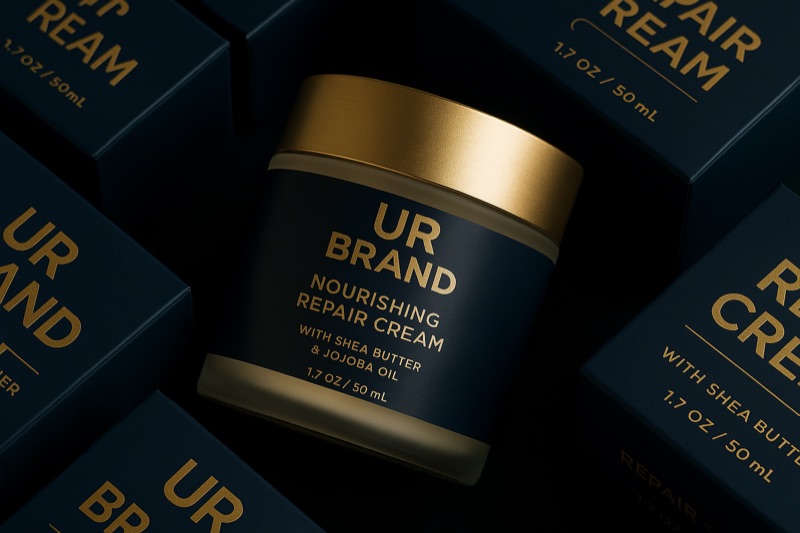
Choose skincare packaging in this order: first the formula, then how it will be used, and only then the look and how you source it. The formula's viscosity determines whether it can go in a dropper, a pump or a tube. If the formula contains ingredients that are sensitive to light or oxidation, consider light-blocking or airless packaging. Once the direction is set, choose the look to match your brand image and decide between stock packaging and a custom mold. Whatever you choose must go through compatibility testing with the formula. Appearance alone is not enough.
Key takeaways
For how a serum's texture and its packaging are decided together, see the serum development guide; for mask pouches and outer boxes, see the sheet mask spec checklist. Which packaging each product format can use is shown on each format's service page, for example serums and ampoules, lotions and creams, toners and mists and facial oils.
Common packaging types compared by function
The table below shows the general characteristics of common skincare packaging. Actual performance varies with the container specification and the supplier.
| Packaging | Suitable textures | Protection from oxygen and light | Hygiene | Product left behind |
|---|---|---|---|---|
| Dropper bottle | Watery to low-viscosity serums, facial oils | Dark glass blocks light, but air gets in every time it is opened | Medium; the dropper goes in and out of the bottle repeatedly | Hard to draw up from the base and shoulder of the bottle |
| Pump bottle | Low- to medium-viscosity toners, lotions and serums | Medium; air flows back in after each dispense | Good; hands don't touch the contents | The dip tube can't reach what is at the very bottom |
| Airless bottle | Medium- to high-viscosity serums, lotions and creams | Good; the piston pushes up and air doesn't flow back in | Good | Low |
| Tube | Medium- to high-viscosity creams, gels, facial cleansers, sunscreens | Depends on the tube structure; laminated tubes give a better barrier | Good; little suck-back after squeezing | Product tends to remain at the end of the tube |
| Acrylic jar | High-viscosity creams, gel-creams, balms | Weaker; wide opening with more exposure to air | Weaker; scooped out with fingers, a spatula can be included | Low |
| Spray bottle | Very thin, watery toners and facial mists | Medium | Good | The dip tube can't reach what is at the very bottom |
| Ampoule | Single-use watery formulas or serums | Good; fully sealed until opened | Good; single use | Depends on the ampoule shape |
| Packaging | Ease of use | Design and printing flexibility | Sourcing |
|---|---|---|---|
| Dropper bottle | Easy to control the dose, but hard to use with one hand | Bottle printing, bulb and dropper colors can be varied | Wide choice of stock options |
| Pump bottle | One-handed use; the pump output must match the viscosity | Many bottle shapes and pump styles | Wide choice of stock options |
| Airless bottle | Needs several presses before the first use | Relatively fewer bottle shapes | Stock options exist; output volume and seal need testing |
| Tube | Easy to squeeze and carry | Full-wrap printing on the tube body, choice of diameters and cap styles | Many stock diameters; printing requires plate-making |
| Acrylic jar | Intuitive to use | Premium look, double-wall options | Wide choice of stock options |
| Spray bottle | Convenient for touch-ups anytime | Many bottle shapes; the nozzle's mist quality needs testing | Wide choice of stock options |
| Ampoule | Must be snapped open, so the opening method and safety need attention | Small print area | Filling and sealing differ from regular bottles and must be confirmed separately |
Some common pairing decisions:
- A very thin formula in an airless bottle: first test whether it leaks from the pump and whether each press dispenses a consistent amount.
- A serum in a pump bottle: viscosity determines the pump specification. Too thick and it won't dispense; too thin and it squirts out.
- A cream in a jar, with concerns about hygiene: include a spatula, or switch to an airless bottle or a tube.
- Light-sensitive ingredients: choose dark glass or opaque bottles, or add light protection through the outer box.
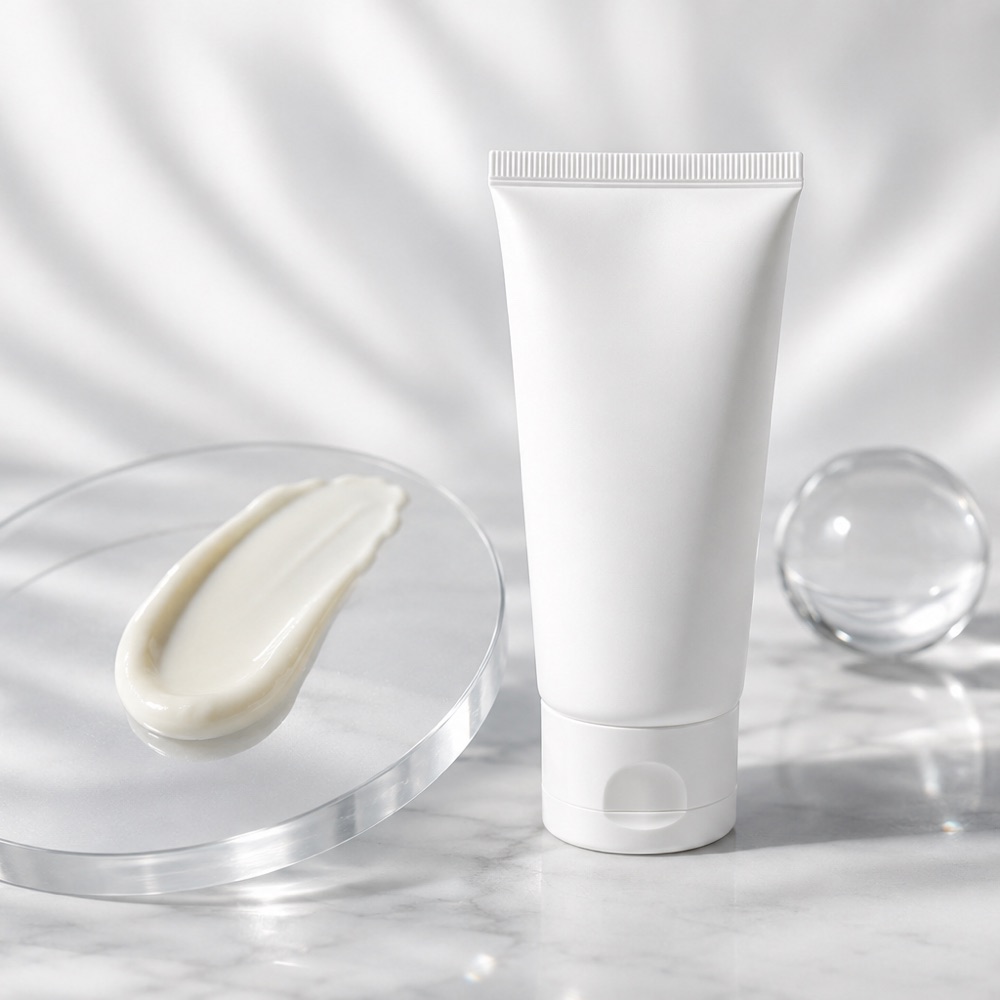
Why the formula and packaging must be compatibility tested
It is very common for packaging to look fine at first and only show problems after it has held the formula for a while. Some typical examples:
- Formulas containing essential oils are unsuitable for some plastics. Essential oils and some oily ingredients can make plastic swell, deform or turn cloudy, or cause the printing on the bottle to come off.
- Highly active vitamin C needs a light-blocking bottle. Light-sensitive ingredients in a clear bottle may change color or odor, and the appearance is the first thing to go.
- A serum's viscosity determines the pump specification. With the wrong pump, it either won't dispense or the amount is inconsistent, and consumers will think something is wrong with the product the first time they use it.
- Some pumps have internal parts that touch the formula. You need to confirm that neither the formula nor the parts change after prolonged contact.
- Packaging may absorb fragrance or allow the formula to lose weight. After long storage, a fainter scent or a lower fill weight both affect product quality.
Compatibility testing usually looks at appearance, color, odor, weight change, whether the packaging deforms, whether the product dispenses smoothly and whether the printing fades. In Misatsu's standard process, stability and compatibility testing is carried out once the formula is confirmed, and we also recommend packaging based on the formula's characteristics.
Our practical advice: start testing with the final packaging in the later stages of sampling, rather than looking for a bottle only after the formula is finalized; and don't switch packaging suppliers or materials at the last minute before mass production, because a change means re-testing. If you supply your own packaging, it must also pass incoming inspection when it arrives at the factory.
How the packaging conveys your brand positioning
Consumers touch the packaging before they ever try the product. The weight of the bottle, how the cap feels when it twists open, the spring of the pump, the look of the dropper drawing up the serum: all of these speak for the brand. In the age of e-commerce, packaging is also the star of product photos, unboxing videos and in-store displays.
| Packaging | Brand image it suits | What users remember | Unboxing and social media appeal | Suitable channels |
|---|---|---|---|---|
| Dark glass dropper bottle | Professional, ingredient-focused, precise | The motion of drawing up and dropping | High; texture close-ups photograph well | E-commerce, salons, professional lines |
| Pump bottle | Practical, everyday, family | One press with one hand | Medium; relies on bottle design and color | Drugstore and mass retail shelves, large sizes |
| Airless bottle | High-tech, freshness, meticulous | Reassurance that the formula never touches air | Medium; you can show the piston rising | Department store counters, e-commerce, high-performance lines |
| Tube | Light, playful, portable | Easy to squeeze and take along | Medium; suits travel and what's-in-my-bag content | Drugstore and mass retail shelves, e-commerce, travel kits |
| Acrylic jar | Rich, luxurious, classic | Opening the lid to see the full jar of product | High; opening the jar makes a strong visual | Department store counters, gift sets, salons |
| Spray bottle | Fresh, hydration anytime | The fine mist on the face | High; mist shots suit short-form video | E-commerce, drugstores, on-the-go kits |
| Ampoule | Intensive care, limited-edition feel | The snap when it opens | High; opening the ampoule feels like a ritual | Seasonal bundles, trial kits, gift sets |
When choosing packaging, ask yourself three questions:
- When consumers first see it, what price positioning will they guess for the brand? The impression the packaging gives should match your positioning.
- Does it have a motion worth filming in product photos and unboxing videos? Dropping, pressing, spraying, snapping and twisting can all become visuals.
- What will consumers remember the last time they use it? Too much product left behind feels wasteful, and that is part of the brand impression too.
For thinking through brand positioning as a whole, see skincare brand positioning; for preparing content and unboxing material before launch, see launch marketing preparation.
Stock packaging vs custom molds
There are broadly three ways to source packaging:
| Option | How it works | Timeline | Differentiation |
|---|---|---|---|
| Stock packaging | Use a bottle shape the supplier already makes | Shortest; when in stock, you can go straight to printing and filling | Differentiate through color, printing, labels and the outer box |
| Customized stock packaging | A stock bottle shape with specified colors, spray coating, metallization or printing | Medium; requires processing and sample approval | Same bottle shape, but the look can be very different |
| Custom mold | Make a new mold to your design, then run mold trials and adjustments | Longest; allow time for mold-making, trials and approval | Highest; the bottle shape itself becomes part of your brand identity |
The logic is simple. For stock packaging, the mold already exists and the supplier may have inventory, so lead times are short and flexibility is high. A custom mold starts from scratch, any changes after a trial mean waiting another round, and suppliers' order conditions differ from those for stock items. That is why packaging is often the longest wait in the whole timeline. From the first requirements discussion to the first shipment, a complete new product typically takes about 4 to 6 months, depending on the formula, stability test results, packaging and the number of sample revisions. Reorders don't require new R&D or stability testing, so they are faster than the first run, and faster still if you use stock packaging that is available off the shelf.
For a first product, we usually recommend stock or customized stock packaging, so development time goes into the formula and brand content. Once the product line is stable and you are sure a bottle shape will be used long term, consider a custom mold. Small-scale experimental programs for testing the market are usually limited to stock containers and stock formulas. For planning the overall timeline backwards, see the timeline from sample to mass production.
Labeling requirements for labels and outer boxes
At the end of packaging design, the most common sticking point is "the text doesn't fit". Under Article 7 of Taiwan's Cosmetic Hygiene and Safety Act (化粧品衛生安全管理法), the outer packaging or container of a cosmetic must show the product name, intended use, directions and storage, net weight or volume, full ingredient list, precautions, the name, address and phone number of the manufacturer or importer, the manufacturing date and expiry date or shelf life, the batch number and other items. The following points apply to products sold in Taiwan. When designing, note that:
- Labeling must be primarily in Chinese or internationally recognized symbols; the full ingredient list may be shown in English.
- When the container is too small, the information can go on a label, a leaflet or the outer box instead. Small dropper bottles and ampoules usually rely on the outer box.
- The full ingredient list is in descending order of content. Since July 2024, Taiwan no longer classifies cosmetics as "specific-purpose cosmetics" (特定用途化粧品), so packaging no longer shows specific-purpose ingredient content or a license number.
- Responsible company: product labeling must state the responsible company's details, and product registration is carried out by a business. In practice, this requires a registered company or business, and we recommend completing that before launch. For details, see who is responsible for the PIF.
- The batch number and expiry date are inkjet-printed during filling, so leave a blank area in the artwork where graphics won't cover them.
- Claim wording must not be exaggerated or imply medical effects; see cosmetic advertising regulations.
The exact labeling format is announced by the competent authority. For details, see our regulatory section and the complete guide to product registration and the PIF. Misatsu reviews label copy against the regulations and carries out a pre-press check once the design is finished.
Packaging selection checklist
- What is the formula's texture and viscosity? Which dispensing methods does it suit?
- Does the formula contain ingredients that are sensitive to light or oxidation, or essential oils?
- In what situations will consumers use it? Do they need one-handed use, portability or dose control?
- Does the impression the packaging gives match your brand positioning? Is there a usage motion worth filming?
- Stock, customized stock or a custom mold? Can the timeline meet your launch date?
- Is there room on the container and outer box for all the required labeling?
- Is compatibility testing of the final packaging with the formula built into the schedule?
FAQ
Q: Can I source my own packaging?
Yes. Packaging you supply yourself must pass incoming inspection when it arrives at the factory, and it also needs compatibility testing with the formula. We recommend handing packaging samples to the R&D team in the later stages of sampling so they can be tested together.
Q: The formula is finalized. Do we need to re-test if we only change the bottle?
Yes. Different materials and different pumps have different compatibility with the formula, and the dispensing amount may also change. Before switching packaging, make sure the timeline can accommodate re-testing.
Start developing
Planning your own skincare line?
You don't need every detail. Share what you know, mark the rest "undecided", and we will help you plan the next step.
- Brand concept and target customers
- Product type (serum, mask, cream...)
- Target launch date and sales channels
Related manufacturing services
Planning your own brand? These OEM/ODM services relate to this article. Everything is made in our TFDA GMP-certified factory in Taiwan.