Developing a Serum: What to Decide from Positioning to Sampling
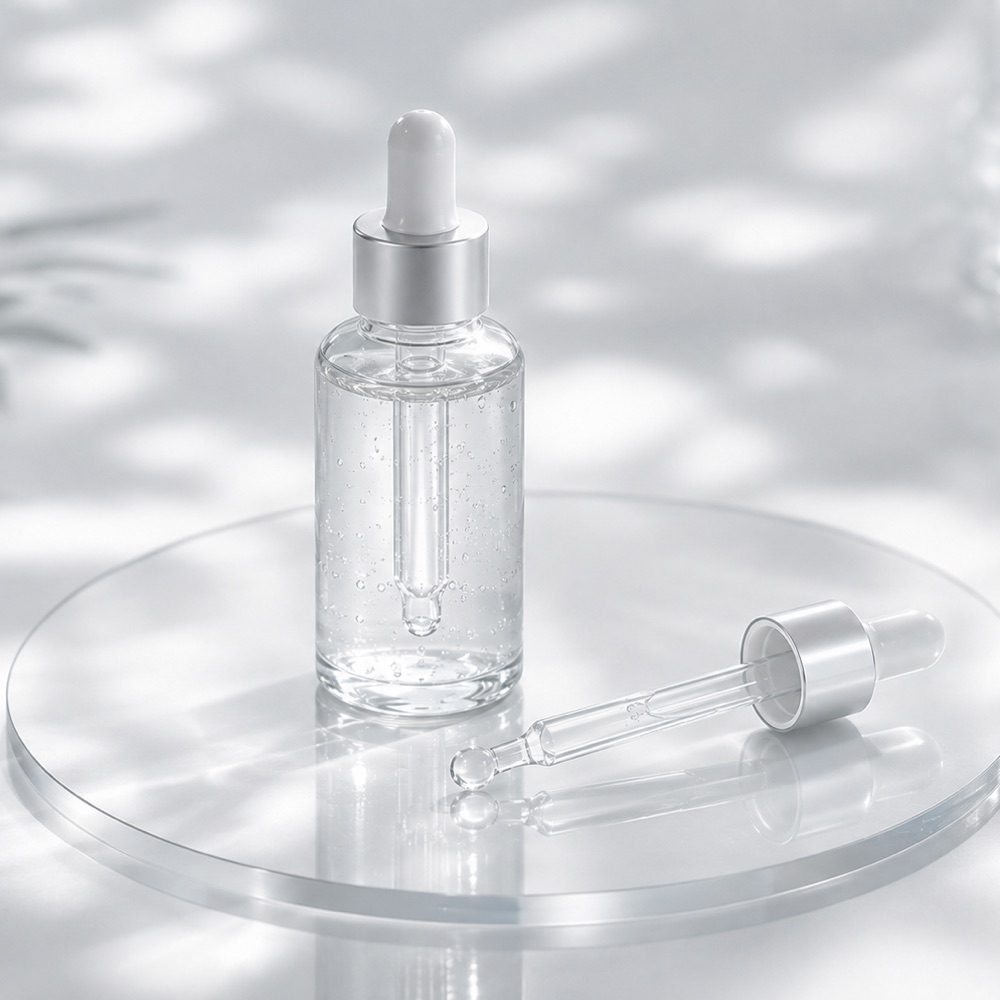
Serum development doesn't start with choosing ingredients. It starts with being clear about who the serum is for, when they'll use it, how it should feel on the skin and how far its claims can go, then writing that into a product brief before asking a manufacturer to make samples. Once you have samples, your feedback needs to be specific: in what situation, what is wrong, and what you want it to become. That tells the R&D team which variable to change. The clearer you are at the start, the fewer revision rounds you'll need and the easier the timeline is to estimate.
Key takeaways
This guide is for brand owners making their first serum, and for product developers at established brands adding a new serum to their line. For the serums and ampoules Misatsu can make, see Serum and ampoule manufacturing. This article covers what you need to decide before development starts.
Eight things to decide before development
| Item | What you need to decide | Why it affects sampling |
|---|---|---|
| Claim direction | Moisturising, softening, light balancing, a radiant look, etc. Ideally just one main claim | The main claim determines the formula's backbone and choice of active ingredients; too many claims pull in different directions |
| Texture | Watery, gel, slightly thick milky, two-phase oil and water | Texture determines the thickening system and which packaging can be used |
| Skin feel | Fast or slow absorption, whether it leaves a film, rich or light | The same ingredients can feel very different; this is the most frequently revised item |
| Fragrance | Fragrance-free, lightly scented, a signature brand scent | Fragrance affects how skin feel is described, how well the target customers accept it, and labelling |
| Size | Bottle size, and whether to offer a trial or travel size | Size affects packaging choice and how long one bottle lasts |
| Packaging type | Dropper bottle, pump bottle, airless bottle, ampoule | Viscosity and packaging must work together; see the packaging selection guide |
| Price positioning | Mass market, department-store counter, professional salon line, or e-commerce hero product; higher or lower end | Positioning determines raw material grade, packaging quality and overall presentation |
| Claim wording | The words you want on the packaging and in ads | How claims are worded affects regulatory classification and documentation; the earlier you confirm them, the easier it is |
You don't need an exact price for price positioning, but you should at least say which shelf you want to sit next to and which products you're comparing yourself with. The R&D team uses that to decide on raw materials and packaging. If you haven't worked out where your brand stands, start with Skincare brand positioning.
Talking about active ingredients
Brand owners often start with ingredients: niacinamide, hyaluronic acid in different molecular weights, vitamin C derivatives, peptides, ceramides. All of these can be discussed, but there are three things to know first:
- An ingredient is not an efficacy claim. Adding an ingredient doesn't mean you can print the matching benefit on the packaging. What you can claim has to be judged separately, based on regulations and evidence.
- Concentration is a formulation decision, not a marketing number. Concentration has to be weighed together with stability, skin feel, irritation and regulatory limits. Some ingredients have regulatory limits, and some affect colour or smell at higher levels. Rather than asking for "as high as possible", tell R&D the positioning and skin feel you want and let them make recommendations.
- Some ingredients affect the packaging. Ingredients sensitive to light or oxidation, for example, usually need light-blocking or airless packaging, which in turn affects the design.
Regulatory limits on claim wording
Under Article 10 of Taiwan's Cosmetic Hygiene and Safety Act (化粧品衛生安全管理法), cosmetic labelling, promotion and advertising must not be false or exaggerated and must not claim medical efficacy. List the claim words you want to use when you write the brief. For example, "moisturising" and "leaves skin soft" can be discussed, while words like "anti-inflammatory", "treats" or "clinical-grade" shouldn't be in your plan at all.
In addition, for claims such as sun protection and whitening, the ingredients used must comply with the Taiwan FDA's (TFDA, 食品藥物管理署) table of restricted cosmetic ingredients (UV filters have a separate table), and the Product Information File (PIF) must include the corresponding efficacy evidence. If your main claim falls into this category, confirm it before development starts. For more, see Cosmetic advertising regulations and our regulatory zone.
How the serum expresses your brand positioning
Consumers don't read formula sheets, but they remember what the first drop looks like in their palm, the sound and feel as it spreads, and the weight of the bottle in their hand. All of these can be decided during development, so your brand positioning needs to be clear before sampling, not added as a brand story after the product is finished.
| Development choice | Brand impression it conveys well | What users remember | How marketing can use it |
|---|---|---|---|
| Watery, spreads quickly | Sleek, urban, minimalist | Ready for the next step straight away | Short videos of a morning routine, commuter scenarios |
| Slightly thick gel with a cushioning feel | Reassuring, caring, steady | A clear texture that stays in the palm | Texture close-ups, slow-paced evening routine content |
| Two-phase oil and water, shake before use | Lab-like, ingredient-focused | The shaking itself becomes a ritual | Unboxing and shaking demos, good for social engagement |
| Fragrance-free | Simple, transparent about ingredients | Only the natural smell of the raw materials | Content marketing paired with ingredient explanations |
| Signature brand scent | Emotional, lifestyle | One sniff and you think of the brand | Fragrance story, in-store and event sampling |
| Dark glass dropper bottle | Professional, precise | Drawing up and dropping the serum | Product photography, professional or salon channels |
| Single-use ampoule | Intensive care, a limited-edition feel | The moment you snap it open | Sales-event sets, trial kits, gift boxes |
A serum doesn't need to tick every box. Pick one or two things you most want consumers to remember, and make sure the formula, packaging and later marketing all say the same thing. For how to plan content and channels before launch, continue with Skincare launch marketing preparation.
Product brief template
You can copy the fields below and use them directly. It's fine to write "to be discussed" in fields you're unsure about, but don't leave them blank. Blanks make R&D guess.
| Field | Example | Notes |
|---|---|---|
| Working product name | Hydrating serum (working name) | Final product name can be decided later |
| Brand positioning in one sentence | Simple hydration for busy office workers | Tells R&D where the product stands |
| Target customers | Office workers aged 25–35 with combination skin | The more specific, the better |
| Sales channels | Brand website, beauty salons | Channels affect packaging and presentation |
| Sales regions | Taiwan, with export under consideration | Regulations differ by export market; mention this early |
| Main claim | Moisturising | Write only one main claim; list secondary claims separately |
| Texture | Slightly thick gel, not watery | You can attach a reference product |
| Skin feel | Absorbs quickly, not sticky, makeup can go on straight after in the morning | Describe the situation of use |
| Fragrance | Fragrance-free | Or write "a faint botanical smell is acceptable" |
| Colour | Clear and colourless | If a slight yellow tint is acceptable, say so |
| Ingredients to avoid | Alcohol, fragrance | Giving reasons helps, e.g. "our customers prefer gentle formulas" |
| Active ingredients you'd like | Hyaluronic acid, ceramides | You can give just a direction and leave levels to R&D's recommendation |
| Size | 30 ml | Also note whether you want a trial size |
| Packaging direction | Dropper bottle, preferably dark glass | If you have no idea yet, write "please recommend" |
| Price positioning | Mid-range department-store counter, benchmarked against two specific products | Naming the benchmark products is enough |
| Claims you'd like to use | Moisturising, leaves skin soft | List them first for regulatory review |
| Benchmark reference product | Brand and product name | Benchmark analysis is possible; see below |
| Target launch | Q2 next year | Used to plan the timeline backwards |
Benchmark reference product: If there's a product you like, you can ask the manufacturer for a benchmark analysis to develop a comparable formula with reference to its texture, skin feel and concept. Benchmarking doesn't mean copying the ingredient list; the final formula is adjusted to your needs.
Beyond the brief, for other information to prepare when approaching a manufacturer, see What to prepare before contacting a skincare manufacturer.
How to test samples once you have them
Sampling usually provides 2 to 3 sample versions at a time. How you test them directly affects the quality of your feedback:
- Test for at least three to five days, morning and evening. First impressions often differ from how a product feels with continued use.
- Test in real situations. Try each sample once in air-conditioning, outdoors, after sweating, layered with a cream or sunscreen, and before makeup.
- Compare side by side. Apply one sample to each hand or each half of the face. Differences are easier to spot than when testing one at a time.
- Keep the same testers. Find three to five people who match your target customers, and don't change them between rounds.
- Test in containers as close to the final packaging as possible. A serum feels different from a sample jar than from a dropper bottle.
Sample feedback form: how to make it useful
The feedback R&D dreads most is "it doesn't feel quite right". Good feedback has three parts: the situation, what happens, and what you want it to become.
| Item | Unhelpful | Helpful |
|---|---|---|
| Texture | Too runny | It drips too fast from the dropper and runs between my fingers; I'd like it to stay in the palm for two or three seconds |
| Absorption | Doesn't absorb well | One to two minutes after patting it in, my face still looks wet, and the cream I apply next pills |
| Stickiness | Too sticky | Half an hour after applying, my hair sticks to my cheeks; fine in air-conditioning, noticeable when I sweat outdoors |
| Moisture | Not moisturising enough | Applied in the morning, my cheeks feel tight by the afternoon; I'd like no tightness all day, but not stickier |
| Fragrance | Smells odd | There's a medicinal smell when I first open it that fades on the skin; I'd like it to be barely noticeable once applied |
| Colour | Doesn't look good | It's slightly yellow, and in a clear bottle it looks old; I'd like it colourless, or a switch to an opaque bottle |
| Layering | Doesn't work with cream | After two pumps of cream on top, it starts to pill; on its own it's fine |
| Packaging trial | Dropper is hard to use | The dropper only fills halfway; with a third of the bottle left, it barely draws anything |
| Brand feel | Not premium enough | It spreads too quickly, without that "pause and care for your skin" feeling; I'd like it to stay in the palm a little longer |
A few more things to keep in mind when writing feedback:
- Label the sample numbers and pick one as the baseline. For example, "Using sample B as the baseline, move the texture slightly towards sample A."
- Set priorities. Sort items into "must change", "acceptable" and "nice to improve". R&D will deal with the first group first.
- Have one person compile everything and send it back in one go. When several people send their own messages, the opinions contradict each other and R&D can only guess.
- Say what you like. If you only mention the negatives, R&D may change the parts you like as well.

Common sticking points in sample revisions
Contradictory requirements. Requests like "light and not sticky, but very moisturising" or "completely fragrance-free, but no raw-material smell" usually require trade-offs. Decide which matters more, then ask R&D to get as close as possible on the other. This is where going back to your brand positioning helps most: if your positioning is sleek and light, protect lightness first.
Changing direction every round. Round one is too runny, round two is too thick, round three you want to add an ingredient. The number of sample revisions is usually agreed before work begins. If the direction keeps changing, or there's a major change, such as switching from a serum to a cream, it amounts to starting development again, and the timeline moves back.
Adding ingredients late. Adding a new ingredient just before the formula is finalised may seem minor, but it can affect stability, colour and skin feel, and earlier tests have to be redone.
Finding out at the end that a claim can't be used. The formula is final, but the packaging copy has to change because of a claim issue, which may even affect your positioning. List your claim wording at the brief stage.
Changing packaging after approving a sample. New packaging means compatibility has to be checked again, for example whether the product deforms the plastic or dispenses smoothly, and the timeline moves back.
Expecting an exact copy of a benchmark product. Benchmarking can achieve a similar texture and skin feel, but it won't copy the ingredient list. Aim for a comparable experience, then differentiate with what you want people to remember about your own brand.
After you approve a sample
Once a sample is selected, it moves into stability and compatibility testing. Then the final formula and packaging specifications are confirmed and a product specification sheet is created. From the first discussion to the first shipment, developing a completely new product typically takes about 4 to 6 months, depending on the formula, stability results, packaging and the number of sample revisions. For how to plan each stage back from your launch date, see the sample-to-production timeline.
Before launch, the brand also needs to complete product registration and the Product Information File (PIF) required in Taiwan. See the PIF guide.
Frequently asked questions
Q: I want to use a particular special raw material. Can I specify it?
We can discuss it. As long as it isn't a prohibited ingredient and you can provide the raw material's COA and SDS, we can help test its stability and compatibility in the formula.
Q: I haven't decided on my brand positioning yet. Can I start sampling?
Yes, but we recommend deciding at least your target customers and price positioning first. Without clear positioning, every sample tends to be "fine" but none is memorable, and you lose the basis for judging revisions.
Start developing
Planning your own skincare line?
You don't need every detail. Share what you know, mark the rest "undecided", and we will help you plan the next step.
- Brand concept and target customers
- Product type (serum, mask, cream...)
- Target launch date and sales channels
Related manufacturing services
Planning your own brand? These OEM/ODM services relate to this article. Everything is made in our TFDA GMP-certified factory in Taiwan.