Positioning Your Own Skincare Brand: Who You Sell To and Why They Choose You
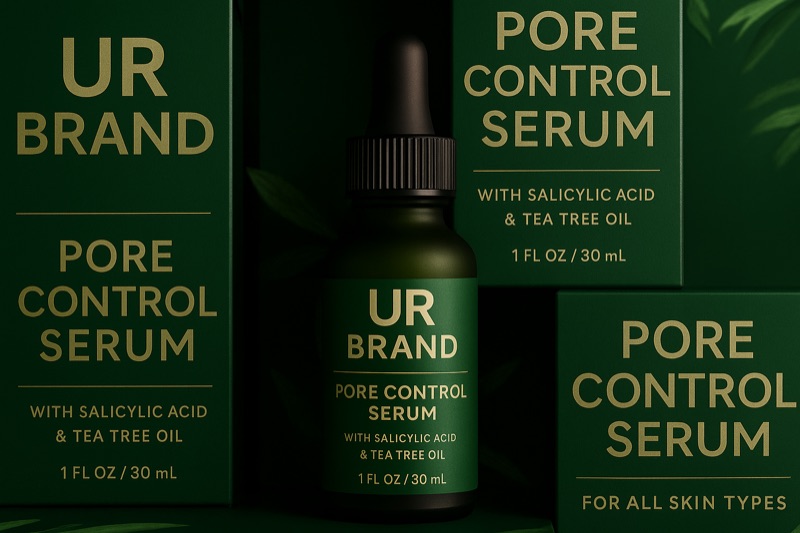
Positioning a new skincare brand comes down to three questions: who the product is for, in what situation they use it, and why they should choose you over anyone else. Write the answers as one sentence, then use that sentence to make every later decision about format, texture, packaging, copy and sales channels. The most common problem for first-time brand owners is not the wrong positioning but no positioning at all, such as "for all skin types and all ages." A product anyone can use is a product no one feels was made for them.
Key takeaways
Describe your target customer in more detail than "women aged 25 to 35"
Age and gender are only a starting point. What actually helps you make decisions is how these people live, what bothers them and how they buy. Try to write each item below until you could recognize the person:
| Dimension | Question to answer | Too vague | More specific |
|---|---|---|---|
| Lifestyle | What does their day look like? | Office workers | Office workers who spend all day in air-conditioned offices and have long commutes |
| Skin concern | What do they notice about their skin? | Wants hydration | Skin feels tight and dry by the afternoon, but they can't easily reapply skincare over makeup |
| Current solution | What do they use instead right now? | A regular toner | Dabbing toner on with a cotton pad in the restroom at lunch, which smudges their makeup |
| Where they buy | Where do they buy skincare? | Online | They see a recommendation on social media, then order on an e-commerce platform |
| Values | Besides results, what do they care about? | Natural | They want to know what each ingredient does and dislike strong fragrance |
| Information sources | Whose recommendations do they trust? | Influencers | Creators who are also office workers and share their everyday routine |
When you finish, ask yourself: if you passed this person on the street, would you recognize them? If not, make it more specific.
Usage situation: when, where and how
The same people need very different products in different situations. Once the situation is clear, format and packaging have a direction:
- Quick top-ups during the day: at the desk or on the commute. Mist bottles, small sizes and formats that don't require washing your hands work well.
- Out and about: sports, travel and outdoor activities. Think about portability and durability, such as tubes, travel bottles and sunscreen sticks.
- A fixed evening routine: applied slowly at home. Droppers, jars and textures that need massaging in are acceptable.
- Intensive care once or twice a week: masks or soaking pads, for example. Packaging can be multi-sheet boxes so customers buy several weeks' worth at once.
- Home care after salon treatments: for beauty salon clients, the product should speak the same language as the in-salon treatment. See planning a beauty salon's first private-label products.
Three sources of differentiation
Misatsu's FAQ groups market differentiation into three dimensions: ingredient technology, target customer and brand values. Doing all three is hard. For your first product, pick one as the main axis and let the other two support it.
| Source | Example | What you need to prepare | Watch out for |
|---|---|---|---|
| Ingredient technology | A specific raw material, a special formulation technology or format | Technical documents for the raw material and a clear explanation of why you use it | Most raw materials are available to anyone, so an ingredient name alone is quickly copied |
| Target customer | Designed for pregnancy, or for people who exercise outdoors | A real understanding of these people; both formula and packaging should match their needs | Special groups are more sensitive to ingredients and claims, so choose materials and write copy with extra care |
| Brand values | Vegan, eco-friendly packaging | Practices that can be checked, such as raw material selection principles, recyclable packaging or refill designs | If you say it, you have to do it. Customers will ask for details |
The most durable differentiation is usually a target customer combined with a specific usage situation, because that is the hardest to copy directly. Others can buy the same raw material, but they don't necessarily understand your customer.
Write a one-sentence positioning statement with a worksheet
Fill in the table below, and the last column becomes your positioning statement. The example is a fictional brand, only to show how to write it:
| Item | Question to answer | Example |
|---|---|---|
| Target customer | Who are you selling to? | Office workers who spend all day in air-conditioned offices and need to rehydrate over makeup |
| Usage situation | When and where do they use it? | In the afternoon at their desk, without removing and reapplying makeup |
| Their current alternative | If they don't buy yours, what do they use? | Dabbing toner on with a cotton pad, which easily smudges makeup |
| Product format | What do you offer? | A hydrating mist that can be used over makeup |
| Point of difference | How are you better than the alternative? | A fine mist; no patting or wiping needed after spraying |
| Reason to believe | Why should they believe you? | The spray nozzle specification and formula texture were adjusted together and tested over makeup |
| Brand personality | How does your brand sound? | Simple, practical, no hype |
| Who you don't sell to | Who is not your customer? | People who want one bottle to replace their entire skincare routine |
Put it into one sentence:
"For office workers who spend all day in air-conditioned offices, we make a hydrating mist that works over makeup. Unlike dabbing on toner with a cotton pad, it needs no patting or wiping, so they can rehydrate right at their desk in the afternoon."
This sentence doesn't need to be an advertising slogan. It is for internal decisions. Whenever you face a choice later, such as whether to add fragrance, whether to use an outer box or which channel to sell in, come back and ask: does this help that office worker?
Pay attention to the "reason to believe" row. A specific claim like "doesn't smudge makeup" needs a basis from trials or testing before launch, and no claim may imply medical efficacy. For where the line is, see cosmetic advertising regulations.
How positioning shapes product and packaging
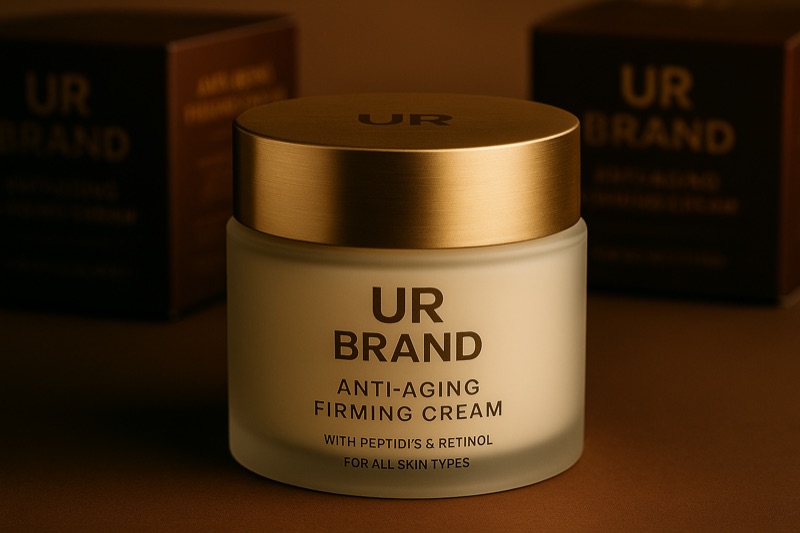
Once the positioning is written, product specifications are no longer chosen by feel. Each one maps back to the positioning:
| Positioning element | Product specs it affects | Example |
|---|---|---|
| Target customer | Texture, fragrance, ingredient choices | For customers who dislike strong scents, consider fragrance-free or a very light scent |
| Usage situation | Format, size, packaging type | Quick top-ups call for a mist bottle; outdoor sports call for a tube or sunscreen stick |
| Point of difference | Hero ingredient, formulation technology, and packaging that protects it | Highly active vitamin C needs a light-blocking bottle; formulas with essential oils are not suitable for some plastics |
| Brand values | Packaging material and structure | For an eco-friendly brand, plan large refill packs and reduce outer boxes |
| Brand personality | Outer box design and finishing | For a refined feel, consider hot foil stamping or embossing; for a minimal look, cut back on decoration |
| Main sales channel | Packaging format and size | Concept stores need boxes that stand on a shelf; e-commerce needs packaging that survives shipping |
Packaging and formula should be discussed together. Misatsu recommends packaging based on the formula's characteristics; for example, a serum's viscosity determines the pump specification. For the trade-offs between containers, see how to choose skincare packaging. For which format to start with, see should your first product be a serum, a mask or a cream?
Common positioning mistakes
- Trying to sell to everyone. "Suitable for men and women of all ages and skin types" sounds like the biggest market, but nobody feels it was made for them.
- Using an ingredient name as positioning. Popular ingredients are everywhere, so "contains X" alone is hard to remember. Explain what situation that ingredient solves for your customer.
- Copying a bestseller. Referencing a benchmark product's texture and skin feel is fine, and Misatsu can analyze a reference product to develop a formula, but it does not copy the ingredient list. Customers will simply compare a copied positioning with the original.
- Positioning that crosses claim boundaries. If your positioning says "treats," "anti-inflammatory" or "medical-grade," you have regulatory risk before the product even exists.
- Launching too many products at once. Releasing a full cleanser, toner, lotion and cream set before the market has validated your positioning spreads your marketing budget and attention thin. Let one or two products make the positioning clear first.
- Positioning that doesn't match the channel. A professional, ingredient-focused product placed in a channel that only competes on discounts will struggle to have its strengths noticed.
- Writing it and filing it away. A positioning statement is for making decisions. If nobody looks back at it when making choices, it's just a paragraph.
FAQ
Q: Do I need to have my positioning fully worked out before contacting a manufacturer?
It doesn't need to be perfect, but you should at least be able to describe your target customer and usage situation. The manufacturer's R&D team uses these two to decide on texture, format and packaging direction. At Misatsu, the first step of working together is a needs consultation and positioning discussion, where channels, target customers, format and sales regions are organized into a product development brief. Anything you haven't worked out yet can be narrowed down together during the discussion.
Q: How is positioning different from a brand story?
Positioning is for internal decisions and answers "who do we sell to, and why do they buy from us." A brand story faces outward and answers "why does this brand exist." The story should be consistent with the positioning, and it should be true. For how to turn positioning into a story, copy and content before launch, see marketing preparation before a skincare launch. If you are building a brand from scratch and want someone to help you organize your ideas step by step, see Mymind Lab.
Next step
.
Start developing
Planning your own skincare line?
You don't need every detail. Share what you know, mark the rest "undecided", and we will help you plan the next step.
- Brand concept and target customers
- Product type (serum, mask, cream...)
- Target launch date and sales channels
相關代工服務
正在規劃自有品牌?以下是與本篇主題相關的 OEM/ODM 代工服務,皆由 TFDA GMP 認證工廠製造。