Your Beauty Salon's Own Skincare Brand: How to Plan the First Products
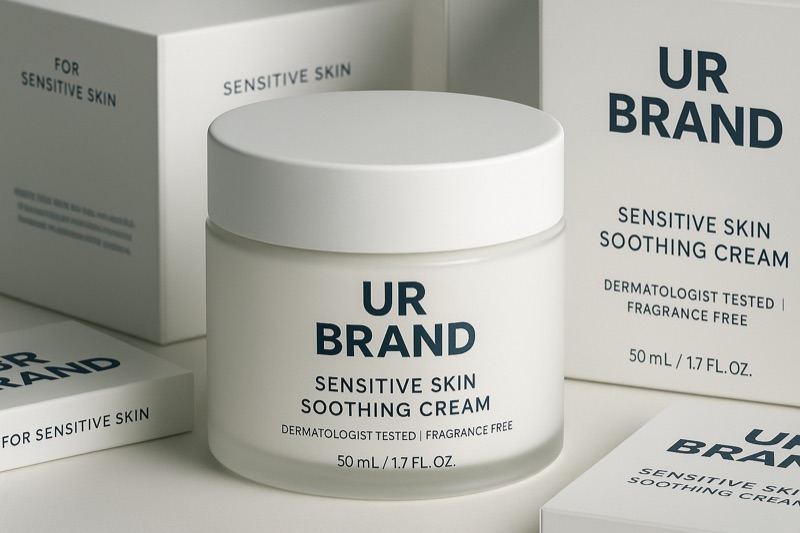
When a beauty salon launches its own skincare brand, don't start the first batch by asking "how many products, and which ones?" Start with three things: who your regular clients are, which steps of your treatments use products, and who in the salon will introduce the products to clients. Once these are clear, you can sort out which items are "in-salon, letting clients experience the brand during treatments" and which are "take-home, helping clients continue their routine and remember to come back". A first batch focused on one or two items with clear roles is usually easier to manage than a full range all at once.
Key takeaways
Take stock of three things first: regulars, treatment flow and who presents the products
Compared with brands that start online, a salon's biggest advantage is that clients already trust you and come back regularly. Your own brand extends that trust to products.
1. Who your regular clients are
- Their main age group, skin tendencies and the treatments they book most often.
- Whether regulars often ask "What product are you using?" or "Where can I buy this?" If they ask often, that is the best place to start.
- How regulars care for their skin at home: do they stick to a brand? Which steps do they often skip?
2. Which steps of your treatments use products
Write down one complete treatment and mark which product is used at each step, such as cleansing, masking, massage and a final moisturizing step. The step clients feel most clearly and praise most often is usually the best candidate for your own brand.
3. Who introduces the products
- Is it the owner, or does every therapist introduce products?
- When does it happen: during the treatment, in the consultation afterwards, or at checkout?
- Are there online channels, such as a LINE Official Account (LINE is the main messaging app in Taiwan), social media or booking system messages?
If no one in your salon is used to introducing products, it is even more important for the first batch to be items "clients have experienced during treatments and ask about on their own", rather than items that only sell with a hard push.
In-salon and take-home: two product roles
Within one brand, products play different roles. When planning the first batch, decide each item's role first, then its specifications.
| Comparison | In-salon use | Take-home |
|---|---|---|
| Main role | Lets clients experience the brand's texture and scent during treatments | Keeps the routine going, so clients think of your salon every day |
| Client touchpoint | Used by the therapist; the client feels it on the skin | The client holds it and keeps it at home |
| Packaging format | Large refill sizes, jars, pump bottles; easy dispensing matters | Retail-size bottles and jars, single sachets or boxes; portability matters |
| Look | Clean and professional, looks good on the treatment station | Premium feel, photogenic and suitable as a gift |
| How it is explained | The therapist explains it verbally during the treatment | Needs a clear instruction card or label |
| Brand function | Builds a professional image | Builds recall and a reason to return |
Some items can play both roles. For example, a clay mask in a jar can be used for in-salon treatments, while boxed sheet masks are sold for clients to take home. This "experience in the salon, continue at home" combination is the easiest way for clients to accept the products naturally, and it fits the way salons operate best.
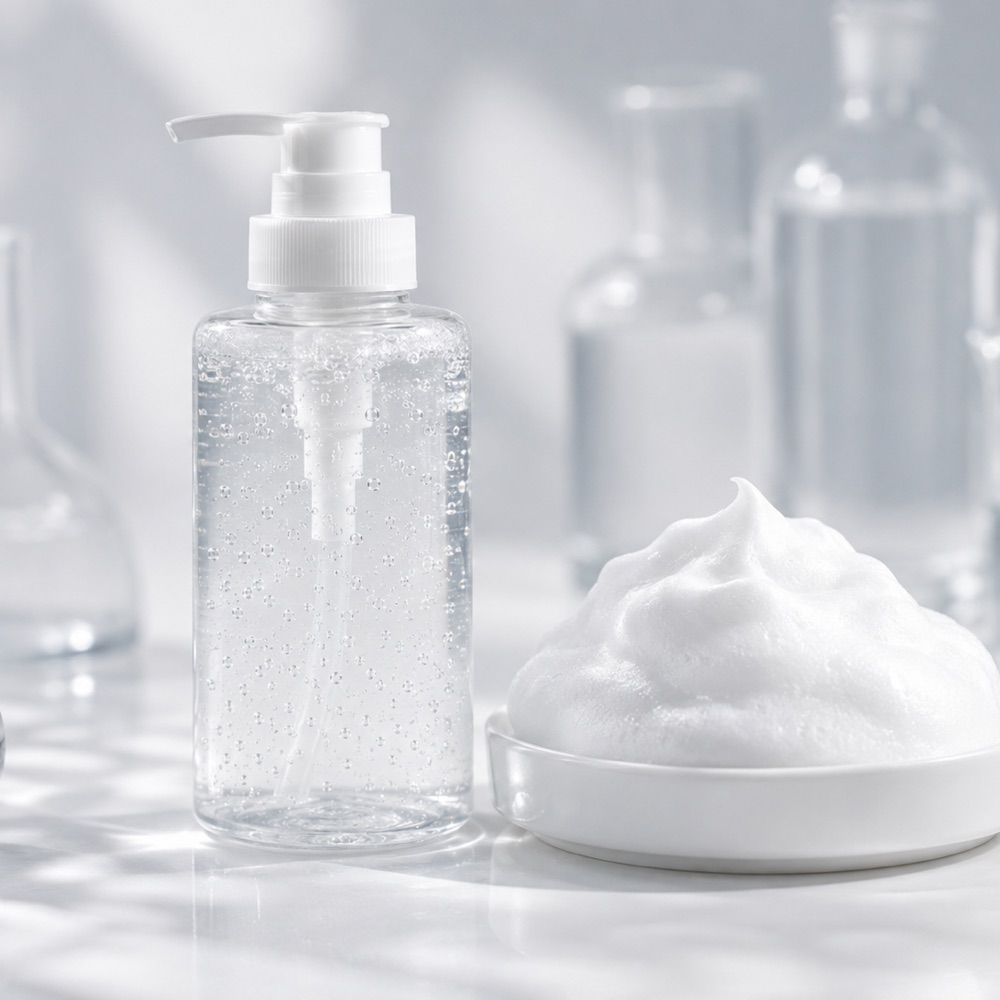
Build products into your treatment flow
The key to selling products naturally is letting them appear during treatments, rather than leaving them on the counter waiting for clients to ask.
- During the treatment: when using a product, have the therapist say its name and one or two features, for example "This is our own hydrating serum; it has a lighter texture", so clients link the sensation with the brand name.
- After the treatment: in front of the mirror, let clients touch their skin and explain how they can continue the care at home.
- Take-home: include simple directions that clearly state how to use it morning and night and which step it goes with.
- At the next visit: ask how they are getting on with it. This is the best kind of conversation with regulars, and it also collects product feedback.
Client retention: make products a reason to come back
Your own brand is not just one more item to sell. It is also a tool that brings regular clients closer to your salon.
- Match it to the treatment cycle: for example, "Use this at home between now and your next treatment", so the product links naturally to the next booking.
- Make seasonal recommendations: when the seasons change, adjust the in-salon products and introduce suitable take-home products at the same time.
- Use feedback to shape the next product: regular clients' experiences are the most genuine reference for planning your second batch.
- Let regulars try products first: before a new product launches, ask a few regular clients to use it and share their views. They will also become your most natural advocates.
Brand image and consistency with your salon
The atmosphere clients feel when they walk into your salon should match what they feel when they receive the product.
- Name and visuals: the brand name, logo and color palette can echo your salon's signage and interior style, without needing to be identical.
- Packaging feel: an elegant, understated space paired with overly cute packaging will feel off to clients. Finishes such as gold foil, silver foil, spot UV, embossing and matte coatings can make the packaging more consistent with your space.
- Display: where and how products are placed is also part of the brand.
- Consistent messaging: every therapist should introduce the products in the same way. Ideally, prepare a shared set of key talking points.
Misatsu works with a partner design team that can help with the logo, bottle and container packaging, and outer box design. If you already have your own designer, Misatsu provides the dieline, and once the design is finished we help with a regulatory review and a pre-press check. For defining your brand image, see also how to position a skincare brand.
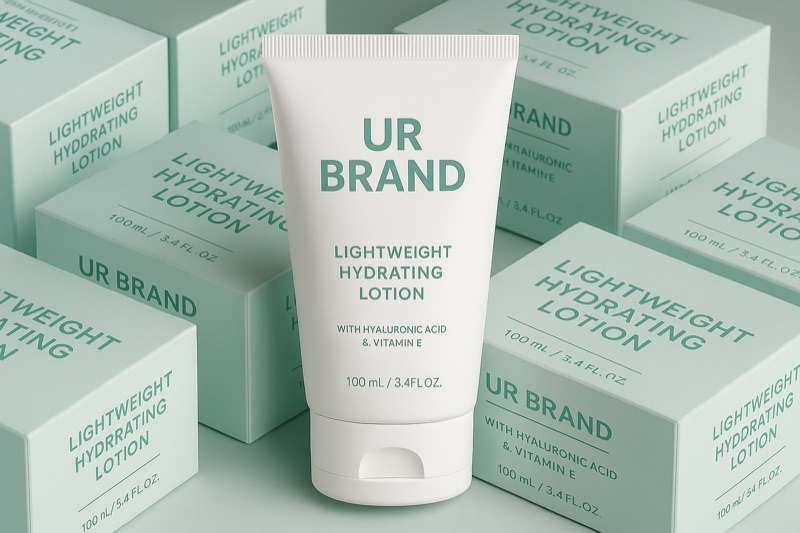
Which items suit a first batch
Common starting points vary by type of service. You can click through to the service pages to see the specifications available for each format.
- Masks: the product most used in facials. In the salon you can use a clay or gel mask in a jar, and for take-home you can offer sheet masks. See mask manufacturing.
- Facial oils: suit salons and spas that offer massage treatments. Use a pump bottle in the salon, and a dropper bottle or roll-on bottle for take-home. See facial oil manufacturing.
- Creams: most often used as the final step of a treatment, and the product whose feel clients notice most easily afterwards, so they work well as both in-salon and take-home items. See lotion and cream manufacturing.
- Serums: if your treatments have a clear signature care focus, a serum best represents your brand concept. See serum and ampoule manufacturing.
- Toners: in the salon you can use large refill sizes or bottles for lotion compresses, and for take-home you can offer a spray bottle. See toner and mist manufacturing.
- Nail and lash salons: you can start with hand care, such as hand masks or oils in roll-on bottles, paired with aftercare advice following the service.
If clients often praise a product you currently use, you can use it as a reference. Misatsu can carry out a benchmark analysis, developing a formula with reference to a benchmark product's texture, skin feel and concept, but without copying its ingredient list.
If you're not sure where to start, see should your first product be a serum, a mask or a cream?. Misatsu's FAQ also recommends that new brands focus on one or two hero products first, rather than launching a full range at once.
First-batch planning template
Copy the table below and fill in one row for each item you want to make. If you can't fill in a cell, that item's role isn't clear enough yet, and it may be worth setting it aside for now.
| Field | Example (hypothetical scenario) | Your item |
|---|---|---|
| Item | Moisturizing cream | |
| Role | Both in-salon and take-home | |
| Place in the treatment flow | Final moisturizing step of a facial | |
| Related treatments | Basic hydrating facial, seasonal-change facial | |
| Regular clients' needs | Regulars often mention their face feels dry and tight in winter | |
| Who introduces it | Every therapist, at the end of the treatment | |
| In-salon packaging | Large pump bottle | |
| Take-home packaging | Retail-size airless bottle with an instruction card | |
| Take-home directions | Use morning and night after cleansing; apply extra to dry areas | |
| Link to the salon image | Outer box color matches the salon's main color | |
| What to ask at the next visit | How skin feels after use, preferred fragrance strength |
The example only shows how to fill in the table; it is not a real client.
Regulations: with your own brand, you are the responsible company
Going from "using other brands' products" to "launching your own brand", the biggest change is that you become responsible for the product. The points below describe the situation in Taiwan.
- Complete your company or business registration first: product labeling must state the responsible company's details, and product registration is carried out by a business. In practice, this requires a registered company or business, and we recommend completing that before launch. If your salon isn't registered yet, you can do this in parallel with product development.
- Complete product registration and build the PIF before launch: products must be registered on the Taiwan FDA (TFDA, 食品藥物管理署) platform, and a Product Information File (PIF) must be prepared. Agree during development which parts the brand and the manufacturer are each responsible for. For details, see the complete guide to cosmetic product registration and the PIF and who is responsible for the PIF.
- Products used in the salon are cosmetics too: they are not exempt from the regulations just because they aren't sold in the salon. Confirm the requirements for labeling, registration and the Product Information File with your manufacturer and regulatory staff during development.
- No therapeutic claims: product packaging, in-salon posters, social media posts and therapists' verbal explanations must not claim medical effects such as "anti-inflammatory", "treats acne" or "heals wounds". You can describe how the product feels to use, for example moisturizing, refreshing or leaving skin feeling soft. For where the line is, see cosmetic advertising regulations.
Misatsu supports product registration and PIF preparation in Taiwan, and reviews label copy for regulatory compliance. For more regulatory information, see our regulatory section.
FAQ
Q: Can we start with in-salon products only and add retail products later?
Yes, and it is a very steady approach. Let regular clients get used to the brand's texture and scent during treatments first, then launch retail items once clients start asking "Can I buy this to take home?" Acceptance will be higher. Keep in mind that in-salon products are cosmetics too, and are not exempt from the regulations just because they are only used in the salon. Confirm the requirements for labeling, registration and the Product Information File with your manufacturer and regulatory staff during development.
Q: Do nail and lash salons suit their own skincare brand too?
Yes, they just start from a different angle. Nail salons can begin with hand care, and lash salons can think about the care products clients need after their service. The key is the same: the products need to be connected to your services, so clients feel "this is that salon's product".
Q: Our salon doesn't have a company registration yet. Can we still enquire?
You can start by discussing your brand direction and product planning. However, product labeling must state the responsible company's details, and product registration is carried out by a business. In practice, this requires a registered company or business, and we recommend completing that before launch. For what to prepare when you enquire, see what to prepare before contacting a skincare manufacturer for the first time.
Next steps
Start developing
Planning your own skincare line?
You don't need every detail. Share what you know, mark the rest "undecided", and we will help you plan the next step.
- Brand concept and target customers
- Product type (serum, mask, cream...)
- Target launch date and sales channels
Related manufacturing services
Planning your own brand? These OEM/ODM services relate to this article. Everything is made in our TFDA GMP-certified factory in Taiwan.