Choosing Your Second Skincare Product: Let Customer Feedback Decide the Next Step
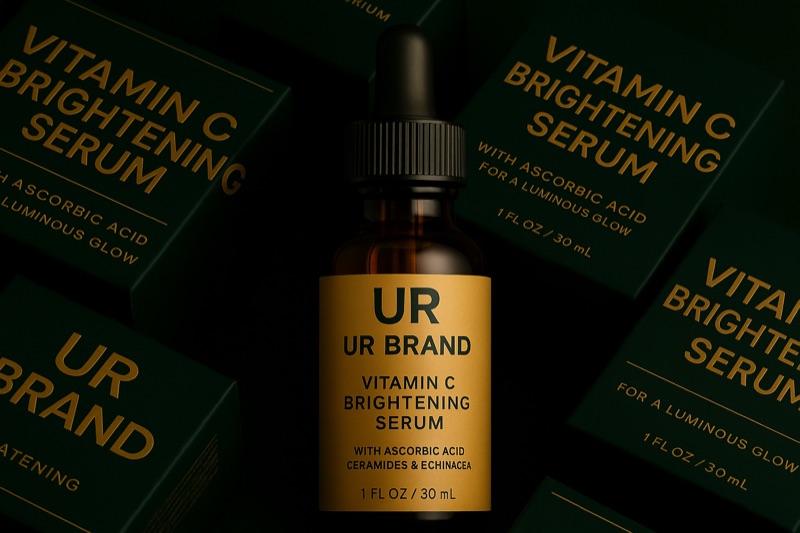
The best answer for your second skincare product is usually already hidden in the feedback on your first. Don't choose it by asking "which ingredient is trending" or "wouldn't a full set look better". Look at what customers asked, complained about and who they recommended it to after using the first product. If they want a matching step, extend the same line. If they say the texture doesn't suit a season or skin type, make a variant. If new kinds of people ask whether they can use it, then consider reaching a new audience.
Key takeaways
This article follows Should your first product be a serum, a sheet mask or a cream? and covers how to decide what comes next once the first product is on the market.
First, check: is the first product really selling?
Before planning a second product, work out what kind of sales the first one is getting.
- Repeat purchases: the same customer buys again after finishing it. This means the product itself has been accepted, and it is the most important signal.
- Unprompted questions: customers or retailers ask "Do you have anything else?" or "Is there something that goes with it?" This means your brand has been remembered.
- The same words keep appearing in reviews: many people independently mention "lightweight", "a pleasant scent" or "spreads easily". These words are your brand assets.
- A one-off spike: the product only sells well during promotions, group buys or gifting season, with little repeat buying. Launching a second product at this point is actually riskier.
If repeat purchases are not visible yet, putting your effort into marketing and distribution for the first product will do more than rushing a second one. For marketing around launch, see the marketing materials to prepare before a skincare launch.
Three signals in customer feedback
Put customer service messages, reviews, retailer reports and conversations with regular customers together, and you will usually see comments like these.
| What you hear | What it means | Direction for the second product |
|---|---|---|
| "After this, I'd like a matching cream." "Is there a matching product?" | Customers want your brand in more steps of their routine | Complete the routine: another format in the same line |
| "Perfect for summer, not rich enough in winter." "I have oily skin and it feels a bit heavy." | Customers like the brand, but the texture doesn't suit some seasons or skin types | A variant of the same product: a different texture or seasonal version |
| "Can men use it?" "Could I give this to my mother?" | People you didn't originally target are interested in the brand | Reach a new audience or use occasion |
| "The bottle is too big to carry." "I'd like a refill." | A use occasion isn't being served | Size extensions: travel size, refills, single-use packs |
When sorting feedback, separate "many people mention it" from "one person says it loudly". A need raised by only one or two customers can be noted down without rushing to turn it into a product.
Comparing the three directions
| Direction | When it fits | Benefit | Watch out for |
|---|---|---|---|
| Complete the routine | The first product has steady repeat purchases and customers ask for a matching product | The same customers are potential buyers, so it is the easiest to introduce | A new format needs its own formula development and testing; it isn't the first product in a different bottle |
| A variant of the same product | Customers like the brand but the texture doesn't suit some seasons or skin types | Reuses the original concept and scent, so customers understand it at a glance | Too many versions confuse customers; names and looks need clear differences |
| Reach a new audience or occasion | A clearly defined new group keeps asking | Widens the brand's audience | It amounts to partial repositioning, needs separate marketing and is the most likely to dilute the brand |
For most new brands, completing the routine is the safest second step: people who bought the first product are the first customers, and the brand story continues naturally.
Score candidates with five questions
Once the direction is set, you will usually have two or three candidates. Put each one through the table below. Wherever you can't answer, the thinking isn't finished yet.
| Question | What to look at | A good answer looks like |
|---|---|---|
| 1. Who will buy it? | Existing customers, or customers you still need to find | "Customers who bought the first product and want a matching step" |
| 2. Why use it with the first product? | Whether there is a natural order of use or occasion between the two | "The first product in the morning, this one at night for extra moisture" |
| 3. Can it reuse your brand assets? | Naming rules, core concept, bottle shape and colors, scent | "Same line name, same box colors, same core concept" |
| 4. Can it be explained in one sentence? | Whether customers and retailers immediately understand how it differs from the first | "It's the winter rich version of our first product" |
| 5. What extra development and regulatory work is needed? | New format, new ingredients, new packaging, new claims | "A different format, so a separate formula; claims reuse our existing moisturizing descriptions" |
A candidate that answers all five well is usually the better second product. If the answer to question five is long, that product needs more development work; consider making it the third product and starting with the one that needs less preparation.
Three common traps when choosing a second product
- Chasing a trending ingredient: it looks newsworthy, but if it has nothing to do with your first product's concept, customers won't connect the two, and you are effectively building a new product from scratch.
- Making up a set: creating a product you can't explain, just to make the range look complete, often ends up as stock nobody introduces.
- Competing for the same spot as the first product: if the second product's use is too close to the first, customers will choose one or the other, and you end up competing with yourself.
What to bring when discussing the second product with your manufacturer
The second product usually develops more smoothly than the first, because many decisions already have a basis. When you talk to your manufacturer, bring:
- Information on the first product: specifications, size, packaging and scent direction. If the first product was also developed at Misatsu, its specification sheet and sample revision records can serve as a starting point.
- A summary of customer feedback: the most frequent descriptions, the most common complaints, and what you want the second product to keep or change.
- Brand assets you want to reuse: the same core concept, the same bottle family or box style.
- Reference products: if customers often compare you with a particular product, use it as a reference. Misatsu can carry out benchmark analysis, developing a formula with reference to a benchmark product's texture, skin feel and concept, without copying its ingredient list.
For the full set of information to prepare for a first project, see the checklist for contacting a manufacturer for the first time.
Remember that in Taiwan every new product needs its own product registration and Product Information File (PIF); being in the same line as the first product doesn't let you skip this. When marketing the second product, the same rule applies: no therapeutic claims. For details, see the guide to product registration and building a PIF and cosmetic advertising regulations.
Product range map template
Putting your current products and candidates in one table shows at a glance what role each one plays and whether any overlap.
| Field | Example (hypothetical) | Your brand |
|---|---|---|
| Brand core concept | Simple hydration for busy office workers | |
| First product | Lightweight hydrating serum, morning and night | |
| What customers say most | "Light, not sticky." "I'd like something richer in winter." | |
| Direction | Complete the routine | |
| Second product candidate | Hydrating cream in the same line, for extra care at night | |
| Relationship to the first product | Used after the serum; can be used alone for extra care in winter | |
| Brand assets reused | Line name, box colors, the same scent | |
| New development needed | Cream formula, airless bottle packaging | |
| Not making for now | A single serum built on a trending ingredient, weakly related to the brand concept |
The example only shows how to fill in the table; it is not a real client. If your brand concept isn't clear yet, start with how to position a skincare brand.
FAQ
Q: We don't have repeat purchase data for the first product yet. Can we start developing the second?
You can start planning, but we suggest not rushing to launch. Product development takes time, so thinking ahead is good; until customer feedback is clear, simply write the direction into your range map, and decide whether to start development once the first product's signals are clear.
Q: Can the second product launch at the same time as the first?
Yes, provided the two have a clear relationship, such as the same line or the same core concept, so customers immediately understand how to combine them. Note that different formats still need separate formula development and testing, and each product needs its own product registration and PIF.
Q: Customers want a product we're not sure we can do well. What should we do?
Discuss feasibility with your manufacturer first. Explain the customer feedback and the texture and use occasion you want; R&D can assess whether it can be done and what to watch for, and then you decide whether to invest.
Next step
Start developing
Planning your own skincare line?
You don't need every detail. Share what you know, mark the rest "undecided", and we will help you plan the next step.
- Brand concept and target customers
- Product type (serum, mask, cream...)
- Target launch date and sales channels
Related manufacturing services
Planning your own brand? These OEM/ODM services relate to this article. Everything is made in our TFDA GMP-certified factory in Taiwan.